
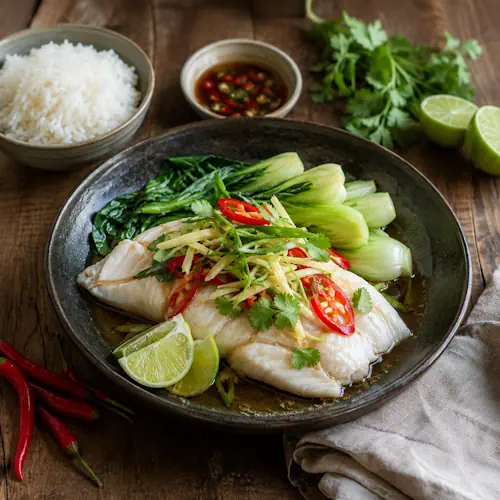
Thai Lime & Ginger Trout
Equipment
- chopping board,
- foil
- Knife
- Steamer,
Ingredients
- 2 garlic cloves chopped
- 5 cm ginger root fresh, peeled and sliced
- 2 limes rind grated and juiced
- 4 pak choi quartered lengthways
- 1 red chilli deseeded and sliced
- 3 tablespoons soy sauce gluten-free
- 4 trout fillets about 150 g each
Instructions
- Place the trout fillets and pak choi on two large pieces of foil.
- Scatter the ginger, garlic and red chilli over the fish and vegetables, then add the grated lime rind and lime juice.
- Pour over the gluten-free soy sauce and loosely seal the foil to form parcels.
- Place the parcels in a steamer and steam for about 10 minutes, or until the trout is cooked through and flakes easily.
- Carefully open the parcels and serve immediately.
Notes & Wine Advice
Serving Advice
Serve the trout immediately after steaming. Jasmine rice is a natural accompaniment and will absorb the fragrant lime and soy juices from the parcels. Extra steamed pak choi or mange tout can be served alongside for a larger meal.Steaming Advice
Seal the foil loosely rather than tightly so there is space for steam to circulate around the Fish. The trout is ready when the flesh is opaque and separates easily into flakes. Avoid steaming it longer than necessary, as trout can dry out quickly.Thai Fish Soup Variation
For the variation from the original recipe, combine 1 litre gluten-free fish stock, 1½ tablespoons red Thai curry paste, 4 kaffir lime leaves and 1 tablespoon gluten-free fish sauce in a saucepan. Simmer for 5 minutes. Add 300 g skinless white fish and cook for 2 minutes, then add 150 g raw peeled king prawns, 3 quartered pak choi and a handful of coriander leaves. Simmer for another 2–3 minutes until the prawns are pink and the fish is cooked through.Storage Advice
This dish is best served immediately. If you have leftovers, cool them promptly and refrigerate in a covered container. Use within 1 day and reheat thoroughly but gently so the trout does not become dry.Wine Advice
A Riesling is a good partner for the lime, ginger and chilli in this dish. Its fresh acidity works with the citrus while its aromatic character complements the ginger and gentle chilli heat.Nutrition values
————————————————————————————————–
About Thai Lime & Ginger Trout
Thai Lime & Ginger Trout brings together several flavours strongly associated with the cooking of Thailand: fresh lime, chilli, garlic, ginger and a salty fermented seasoning. Rather than relying on a rich sauce, the recipe uses these aromatic ingredients to season the trout while it gently steams.
Balance in Thai Cooking
Thai food is often characterised by the interaction of sour, salty, spicy and sometimes sweet flavours. This recipe focuses mainly on three of those elements. Lime provides acidity, soy sauce supplies saltiness and red chilli contributes heat. Ginger and garlic add fragrance and depth without requiring a long list of seasonings.
The ingredients are therefore more important as a combination than individually. The sharpness of lime prevents the fish from tasting heavy, while the savoury soy sauce provides contrast to the fresh citrus.
Fish in Thai Cuisine
Fish and seafood have an important role in Thai cooking, particularly in regions close to rivers and the coast. They appear grilled, fried, steamed and in soups and curries, often accompanied by fresh herbs, chillies and acidic ingredients.
Trout itself is not one of Thailand’s traditional native fish choices, so this recipe is best understood as a Thai-inspired preparation rather than a claim to one specific traditional Thai dish. Its character comes primarily from the flavour combination and cooking method.
The Role of Lime
Lime is particularly useful with fish because both its juice and aromatic rind can be used. In this recipe, the juice contributes acidity while the grated rind supplies citrus oils and a stronger fragrance.
This use of fresh citrus gives the dish a noticeably different character from fish seasoned primarily with dried herbs or heavy sauces. The flavour remains bright and clean, allowing the trout itself to stay prominent.
Ginger, Garlic and Chilli
Fresh ginger contributes warm, aromatic notes, while garlic provides a deeper savoury flavour. Red chilli introduces heat but is deseeded first, which makes its contribution more controlled.
Together these ingredients create an aromatic layer around the trout. Because they are enclosed with the fish, their fragrances are captured during steaming rather than disappearing into an open cooking pan.
Pak Choi
Pak choi is particularly suited to this preparation because its leafy tops and crisp stems provide two textures within the same vegetable. It softens during steaming but can retain some bite when not overcooked.
Its mild flavour also makes it a useful partner for strongly aromatic ingredients. Instead of competing with the lime, chilli and ginger, it absorbs some of the seasoned juices released inside the parcels.
Cooking with Steam
Steaming differs considerably from frying or roasting because no additional cooking fat is required. Moist heat surrounds the ingredients and gently transfers heat into the fish and vegetables.
Enclosing the ingredients in foil creates a small steaming environment of its own. Moisture released from the fish, vegetables, lime juice and soy sauce remains inside, carrying the aromatic flavours through the parcel.
A Simple Combination of Thai Flavours
The recipe demonstrates how relatively few ingredients can produce a distinctive result when each has a clear purpose. There is no elaborate curry paste or lengthy marinade. Instead, fresh aromatics and citrus provide most of the character.
That simplicity keeps the trout at the centre of the dish while still giving it a recognisably Southeast Asian flavour profile. It is a useful example of adapting familiar ingredients and a straightforward steaming technique to the bright, contrasting flavours associated with Thai cooking.